Foundation Stabilisation & Subsidence Remediation

Confirmed Loss of Bearing? Targeted Ground Treatment Without Conventional Underpinning

Where investigation confirms loss of bearing beneath a foundation, M&T Global supports the specification of GeoPro LV-20 as a targeted, minimally disruptive ground-improvement solution. Treatment proposals are developed around the identified ground conditions, defined treatment depths and appropriate requirements for delivery records and post-treatment verification.

A controlled, evidence-led approach for property owners, engineers, loss adjusters, insurers and claims professionals.

Minimal Excavation Small injection points can reduce disruption to the property and surrounding finishes.
Defined Treatment Depths Injection depths and locations are developed around the investigated ground conditions.
Recorded & Verifiable Delivery records and appropriate post-treatment checks support technical and claims review.

Suitability is investigation-led. Resin injection is not presented as a universal replacement for underpinning. The appropriate remediation method depends on the cause of movement, ground conditions, foundation arrangement and project objectives.

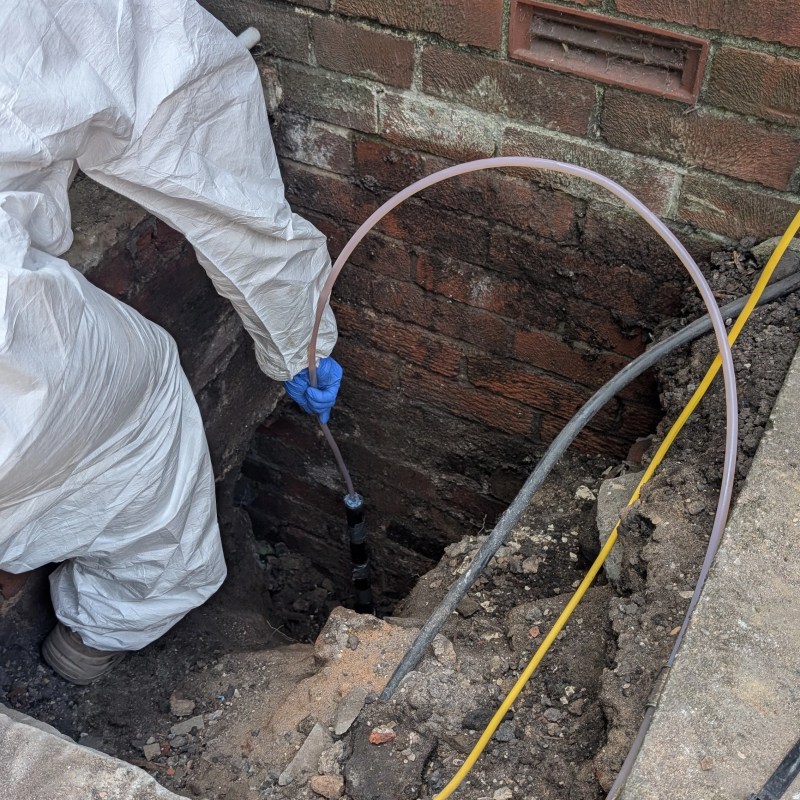
Technician carrying out targeted GeoPro LV-20 resin injection beneath a foundation -->

Targeted Ground Treatment

Treatment Designed Around the Evidence Defined injection locations, treatment depths and recorded delivery data.

02 — Investigation & Suitability

Evidence Before Intervention

Effective remediation begins by establishing why the foundation has moved, where support has been lost and whether injection is appropriate. The treatment design is developed from site evidence rather than applying a predetermined volume of resin.

Structural Review

Review the damage pattern, foundation arrangement, construction details and available claim or engineering information to identify the probable movement mechanism.

Ground Investigation

Targeted testing such as DCP or SPT investigation helps establish ground resistance, weak zones, fill variability and the depth of potentially competent bearing material.

Level & Void Assessment

Level surveys and, where appropriate, ground-penetrating radar help define distortion, investigate accessible voiding and establish a measurable baseline before treatment.

Defined Treatment Design

Findings are used to determine injection locations, treatment depths, spacing and the verification measures required for the specific foundation and ground conditions.

Suitability-Led Remediation

Resin injection is recommended only where the evidence supports it.

The assessment considers the cause of movement, soil structure, accessible pathways, foundation geometry and environmental conditions. Where injection is unsuitable or further investigation is required, that limitation should be identified before works begin.

  • Probable movement mechanism identified
  • Treatment depths defined from evidence
  • Foundation constraints considered
  • Verification approach agreed

03 — Technical Rationale

Why GeoPro LV-20 for Granular Soils

GeoPro LV-20 is a single-component, low-viscosity polyurethane developed for conditions where controlled permeation rather than aggressive displacement is required. When introduced under controlled injection pressure, the resin can move through accessible interconnected pathways within suitable granular ground before reacting with available moisture.

Very Low Viscosity

With a stated viscosity of approximately 20 mPa·s, GeoPro LV-20 is designed to enter accessible pore spaces and interconnected pathways in suitable fine-to-medium granular materials.

Hydrophobic Formulation

The cured closed-cell structure is intended to resist water absorption and maintain its integrity where intermittent or persistent ground moisture may be present.

Moisture-Triggered Reaction

Contact with available moisture initiates the reaction and controlled expansion, producing a rigid resin-and-soil matrix that can bind particles and fill accessible voids.

Material Comparison

A high-level comparison of common injection materials. Final material selection should follow investigation of the ground, foundation arrangement, treatment objectives and movement risk.

Comparison of injection materials used for ground treatment beneath foundations
Material Typical Viscosity Distribution Behaviour Strength Potential Potential Advantages Key Considerations
GeoPro LV-20 Granular-soil option Very low Designed for pressure-driven permeation through accessible interconnected pathways Moderate to high, depending on ground conditions Rapid reaction, small injection points and limited excavation Suitability depends on soil grading, fines content, moisture, connectivity and achievable containment
Two-Component PU Typically moderate to high Often associated with localised expansion and displacement High to very high Rapid strength development and potential for structural support or controlled lifting Expansion must be carefully controlled to manage the risk of unintended movement or heave
Cementitious Grout High relative to low-viscosity resin Commonly suited to larger voids, fractures or displacement grouting applications High after curing Established material that can be economical for bulk void filling Heavier application with slower curing and generally limited permeation into finer pore networks

Field Execution, Control & Verification

Controlled Delivery. Verifiable Outcomes.

Successful resin injection depends on an investigation-led treatment design, controlled material placement and appropriate verification. M&T Global supports engineers, insurers and loss adjusters with technical information relating to GeoPro LV-20 and its potential use within a professionally designed remediation strategy.
-->
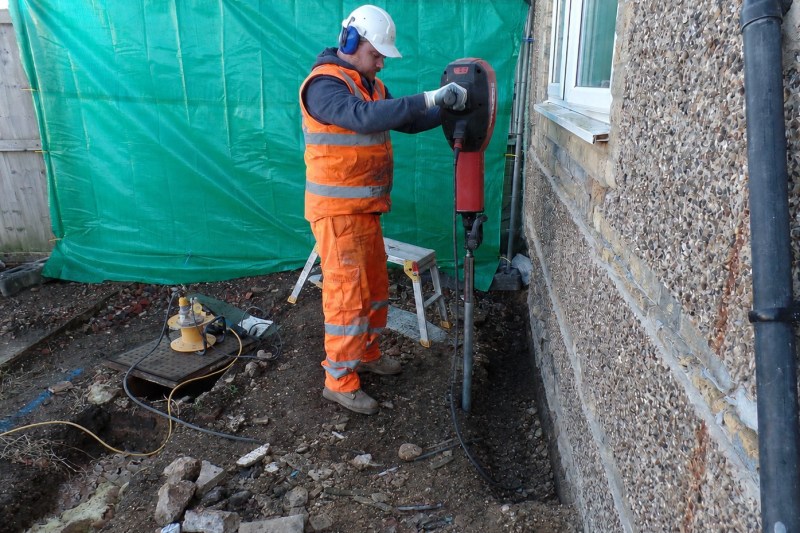
Controlled material placement through predetermined injection points
Monitoring during a foundation resin injection treatment -->
Treatment parameters monitored throughout field delivery

A structured treatment methodology

The final methodology must respond to the confirmed ground conditions, foundation arrangement and identified mechanism of movement. The following sequence provides a general framework rather than a substitute for project-specific engineering design.

01

Investigate

Establish the cause and extent of movement through appropriate structural review, ground investigation and examination of drainage or other contributing factors.

02

Design

Define treatment zones, injection locations and project-specific controls in response to the findings of the investigation and the objectives set by the responsible engineer.

03

Inject

Introduce GeoPro LV-20 through controlled injection points so that the low-viscosity resin can permeate spaces between susceptible soil particles and bind the treated matrix.

04

Verify

Review treatment records and specified verification information to assess whether delivery has been completed in accordance with the approved project methodology.

Treatment Control

Monitoring throughout delivery

Resin injection is a controlled ground-treatment process. Treatment information should be reviewed against the project methodology and interpreted alongside the available structural and geotechnical evidence.

GeoPro LV-20 is intended for soil particle binding and improvement of the treated matrix. It is not promoted as a system for deliberate structural re-levelling.

Injection location and depth

Injection points and treatment depths should correspond with the defined treatment zone and the foundation or ground profile identified during investigation.

Material use and treatment sequence

Material consumption and injection sequencing can be recorded to provide traceable information about the execution of each treatment area.

Observed response

Site observations, material behaviour and any specified monitoring information should be reviewed as work progresses, allowing the responsible project team to consider whether an adjustment is required.

Treatment records

Project documentation can include injection locations, treatment depths, material usage and relevant observations, subject to the recording requirements established for the project.

Verification framework

Verification requirements should be selected by the responsible professionals to suit the ground conditions, treatment objectives and level of assurance required.

Review area Purpose Potential evidence
Treatment coverage Confirm that injection was undertaken within the treatment zones defined by the approved methodology. Injection-point plans, depth records and site documentation.
Material placement Provide traceable information regarding the quantity and sequence of material introduced. Material-usage records, batch information and treatment logs.
Ground response Review whether the observed treatment response is consistent with the intended ground-improvement objective. Site observations and any project-specified testing or monitoring results.
Completion review Allow the responsible project team to assess the completed treatment against the specified scope. Completion records, marked-up plans and supporting technical documentation.

Project-Specific Technical Support

Request a technical review

If you are an engineer, insurer, loss adjuster or property professional considering a resin-injection strategy, contact us for further information on our Geopro LV-20 resin..

We use cookies to ensure that we give you the best experience on our website.